Home Projects About & Team Events (W.I.P.) Sponsors (W.I.P.) Engineering Blog ES-LG Mk.1 (P-02) Contact
Project P-02 Status: Completed Nov 01, 2025

Enhanced Stability Landing Gear (ES-LG) Mk.1

A custom 3D-printed landing gear system engineered for MUAV-class drones to increase roll stability during aggressive takeoff and landing profiles.

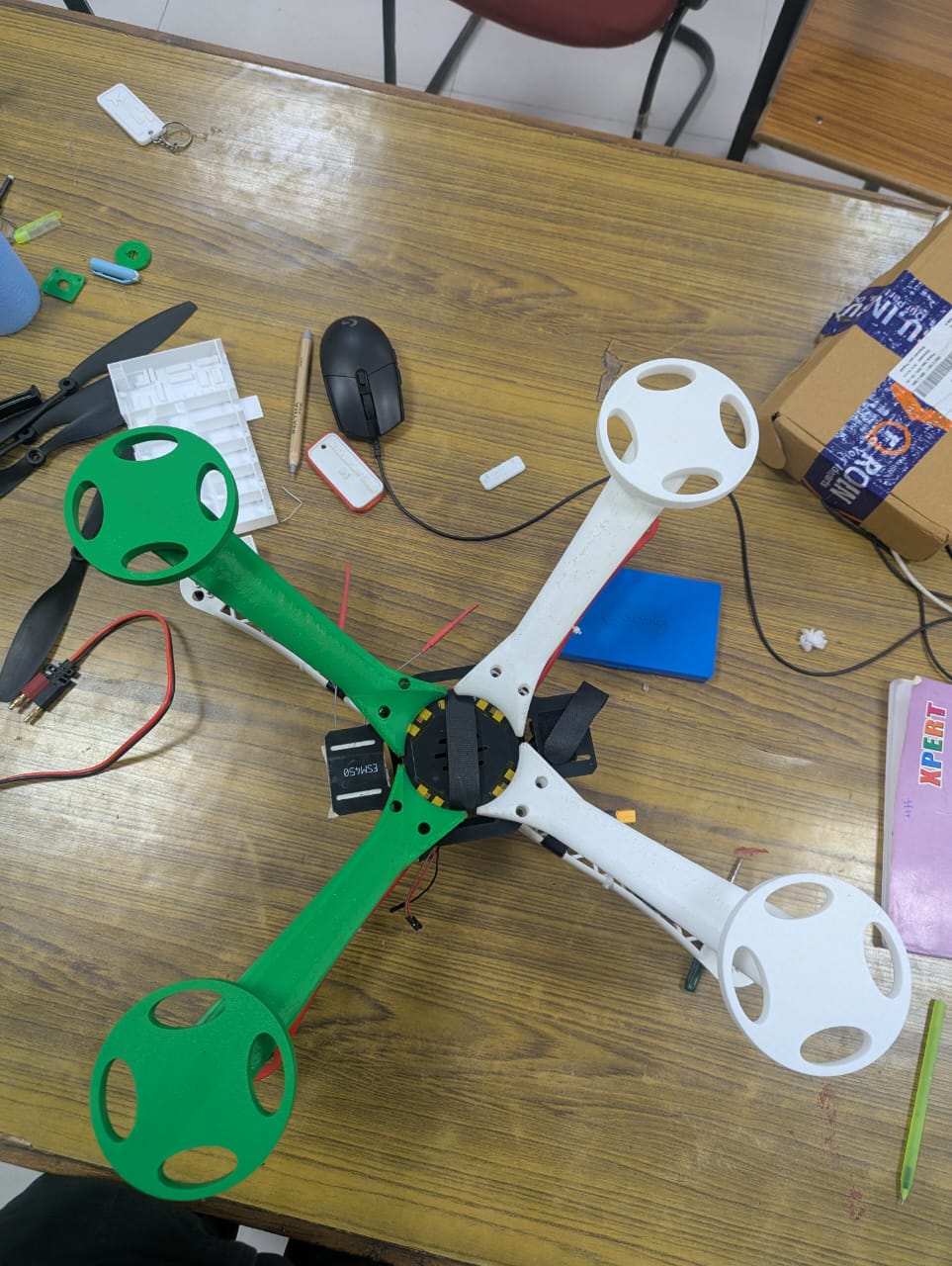
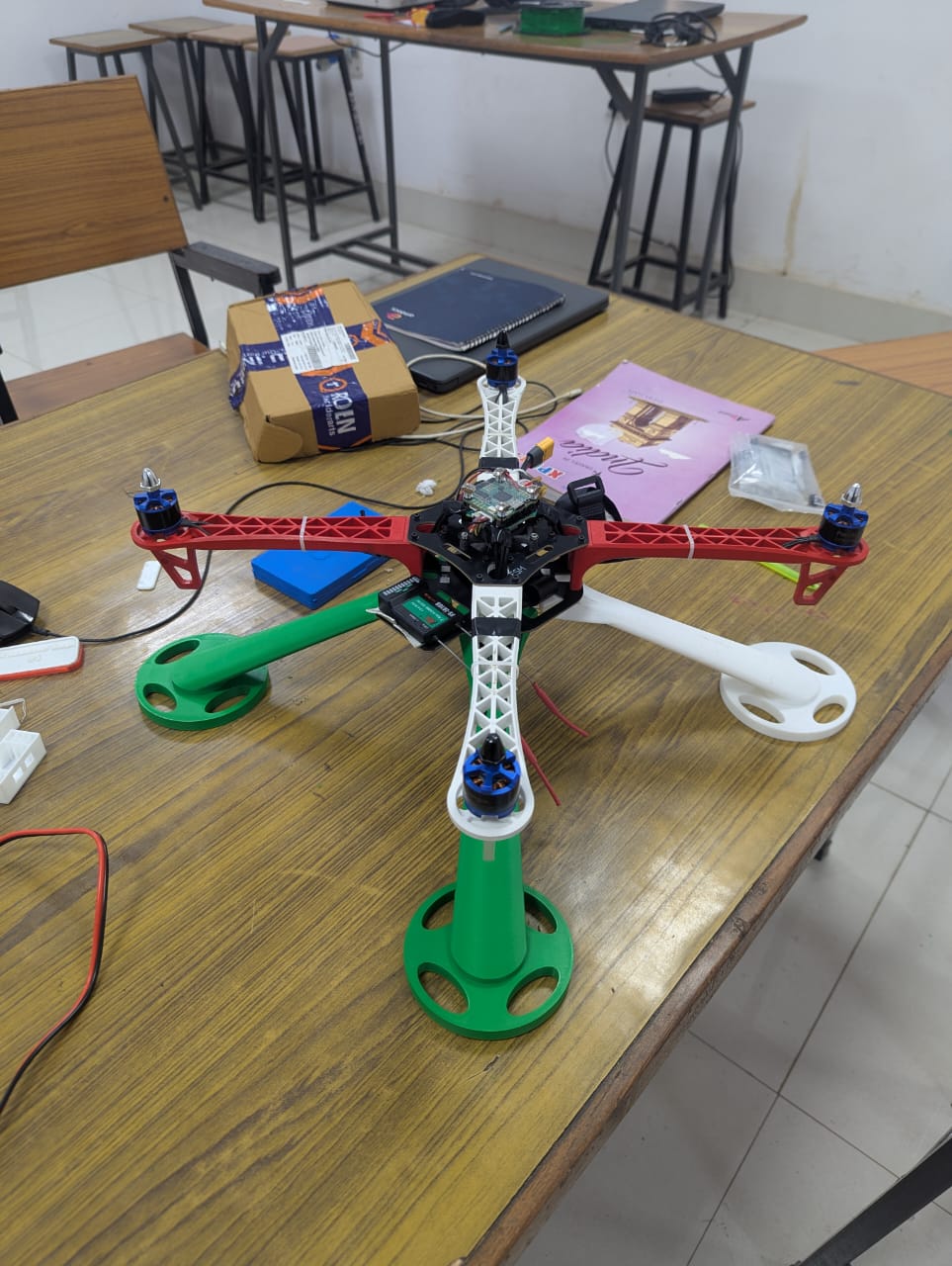
Full MUAV quadcopter fitted with custom green and white 3D-printed landing gear on the RJIT lab table
Validation Summary

Designed, simulated, and field-proven

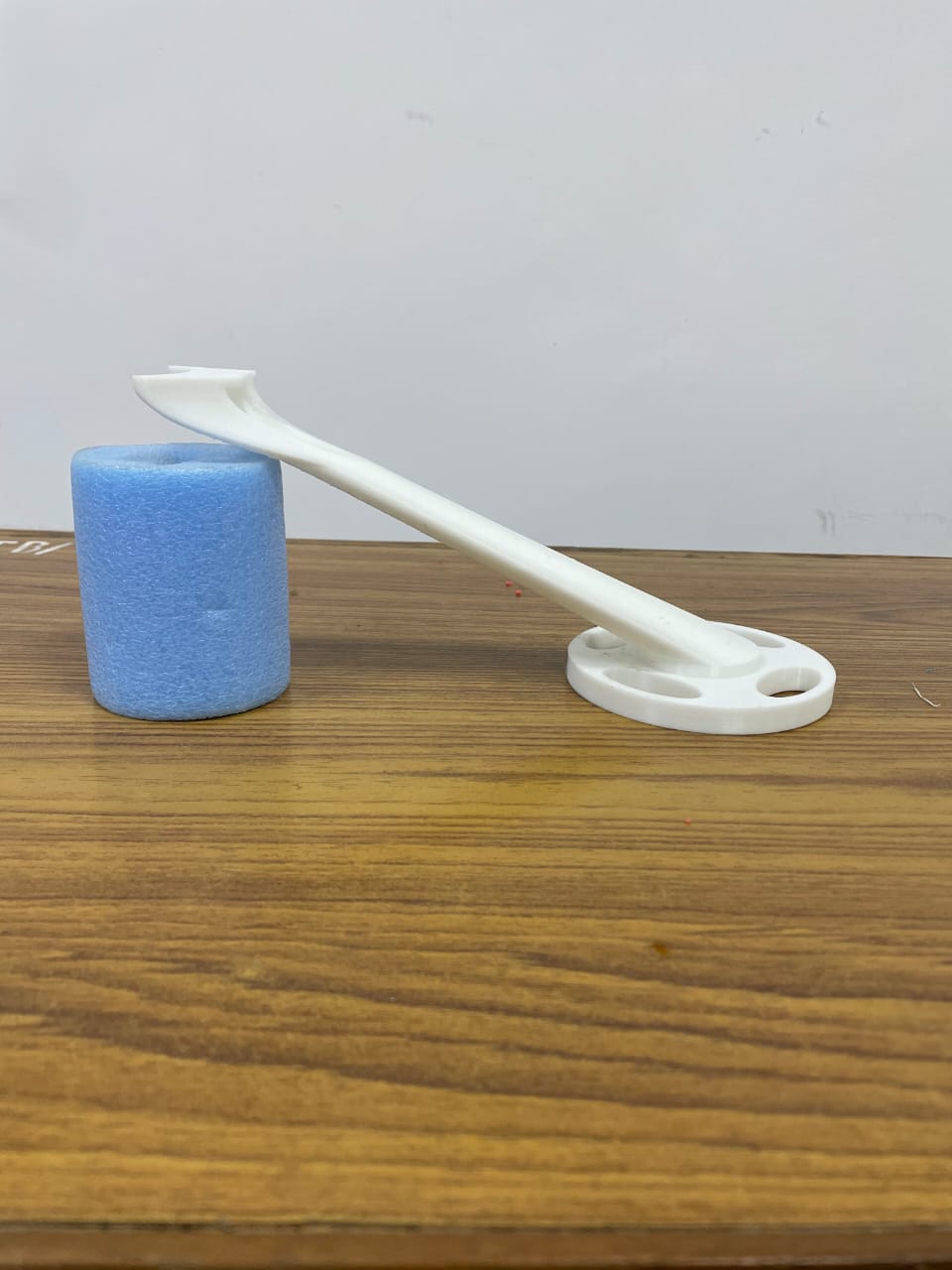
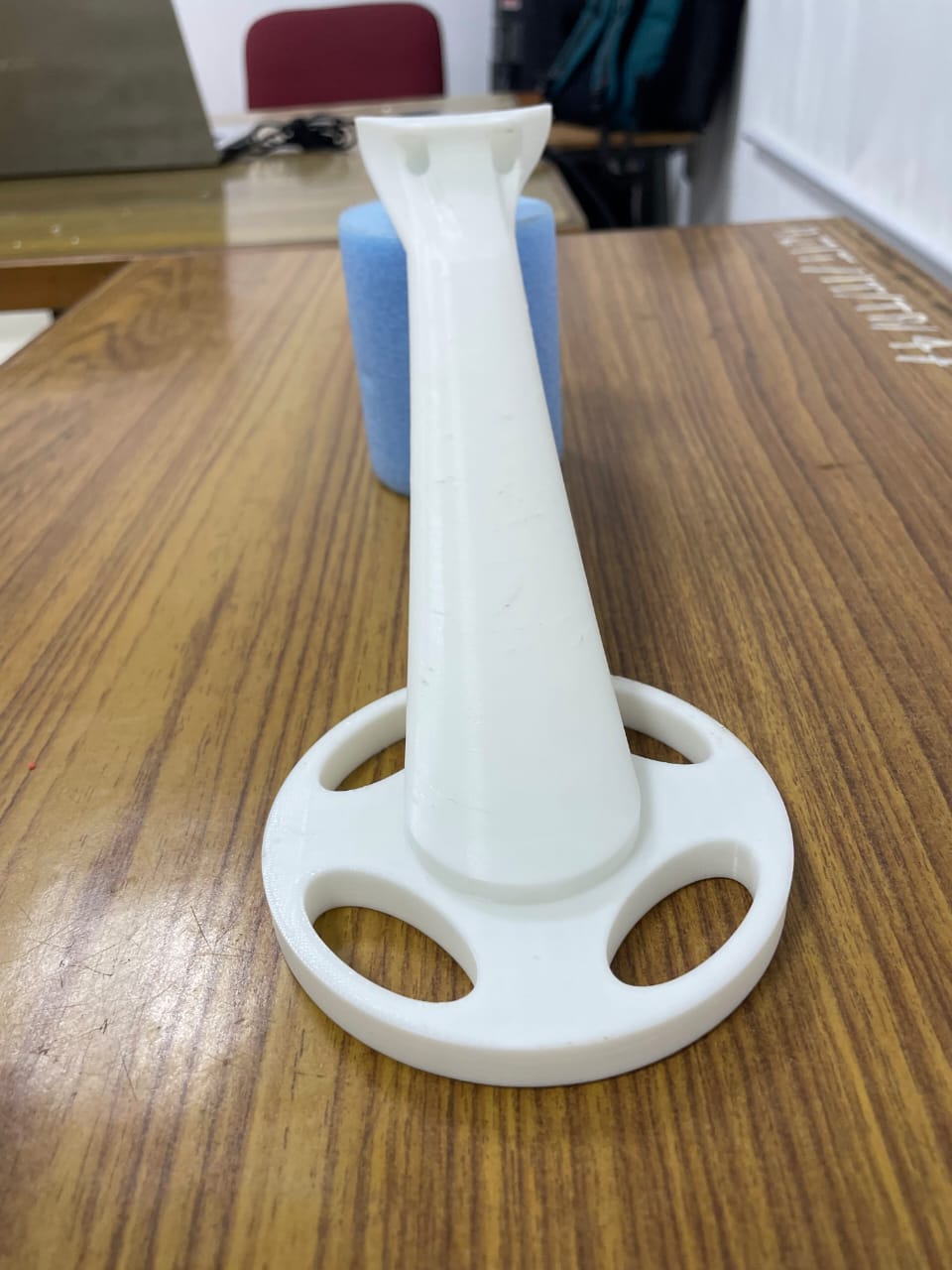
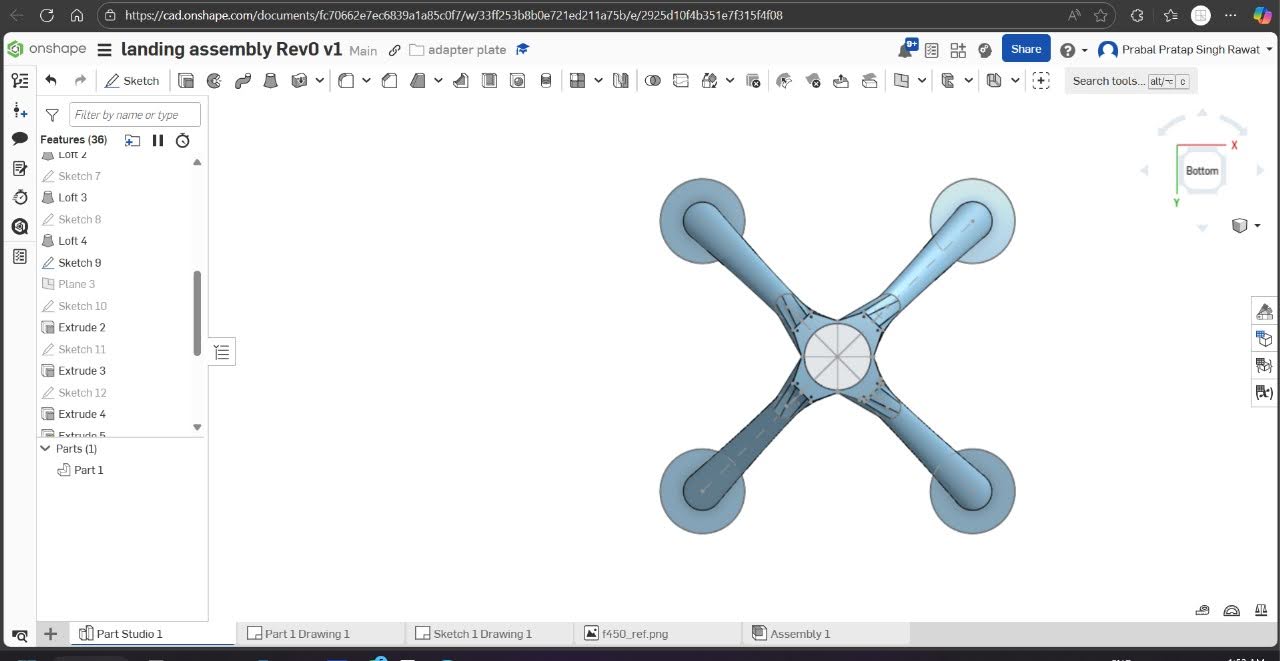
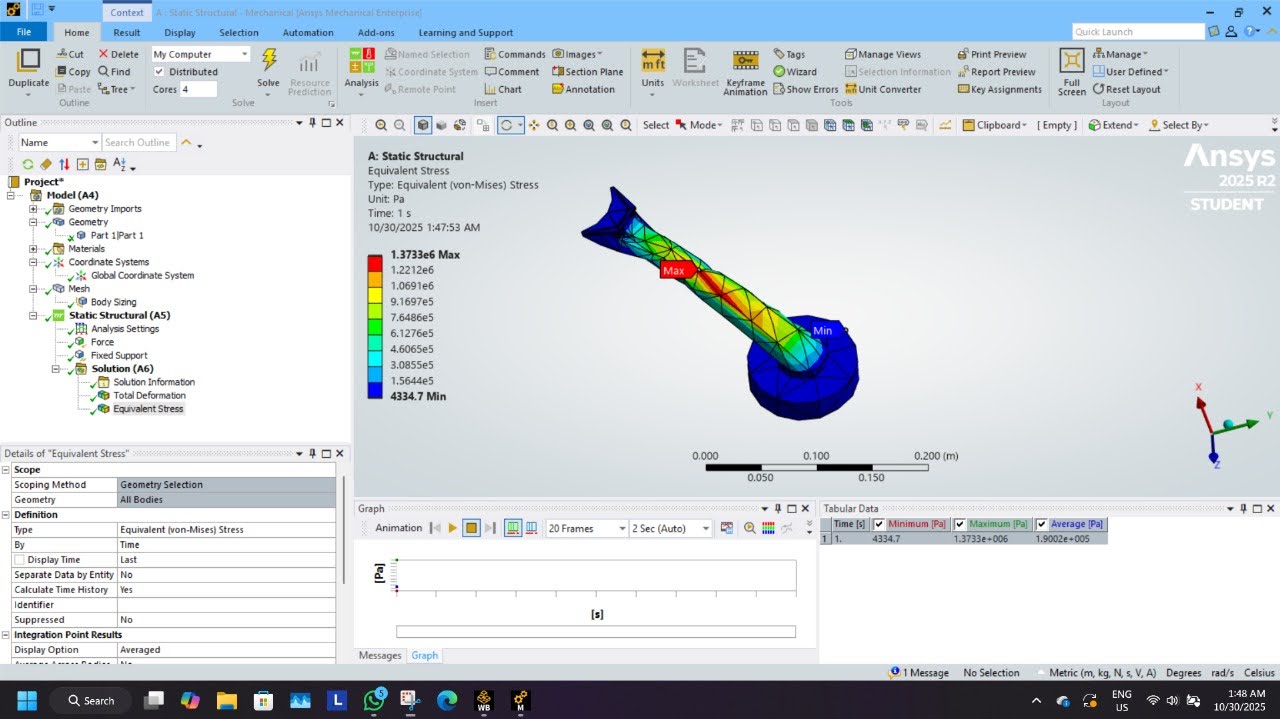
Developed in Onshape CAD and structurally validated through finite element analysis (FEA) in ANSYS Student Edition. Following a single prototype leg fitment check—which confirmed tolerances with zero post-design revisions—full-set production was completed on our Bambu Lab A1 FDM printer.

CAD Tooling Onshape CAD
FEA Validation ANSYS Student Edition · 12.5 N static load per leg
Manufacturing Bambu Lab A1 FDM 3D Printer
Design & Analysis Prabal P.S. Rawat (President)
Field Operator Sangam Kumar (CSE, Year 3)
Problem Statement

Why commercial MUAV landing gear falls short

Evaluated off-the-shelf landing gear options proved structurally suboptimal for MUAV operations. Their narrow cross-sections restrict impact tolerance during non-ideal landings, while elevated leg geometry raises the aircraft's center of mass—reducing roll stability during aggressive takeoff and landing maneuvers.
Engineering Solution

Lower center of mass & visual heading cueing

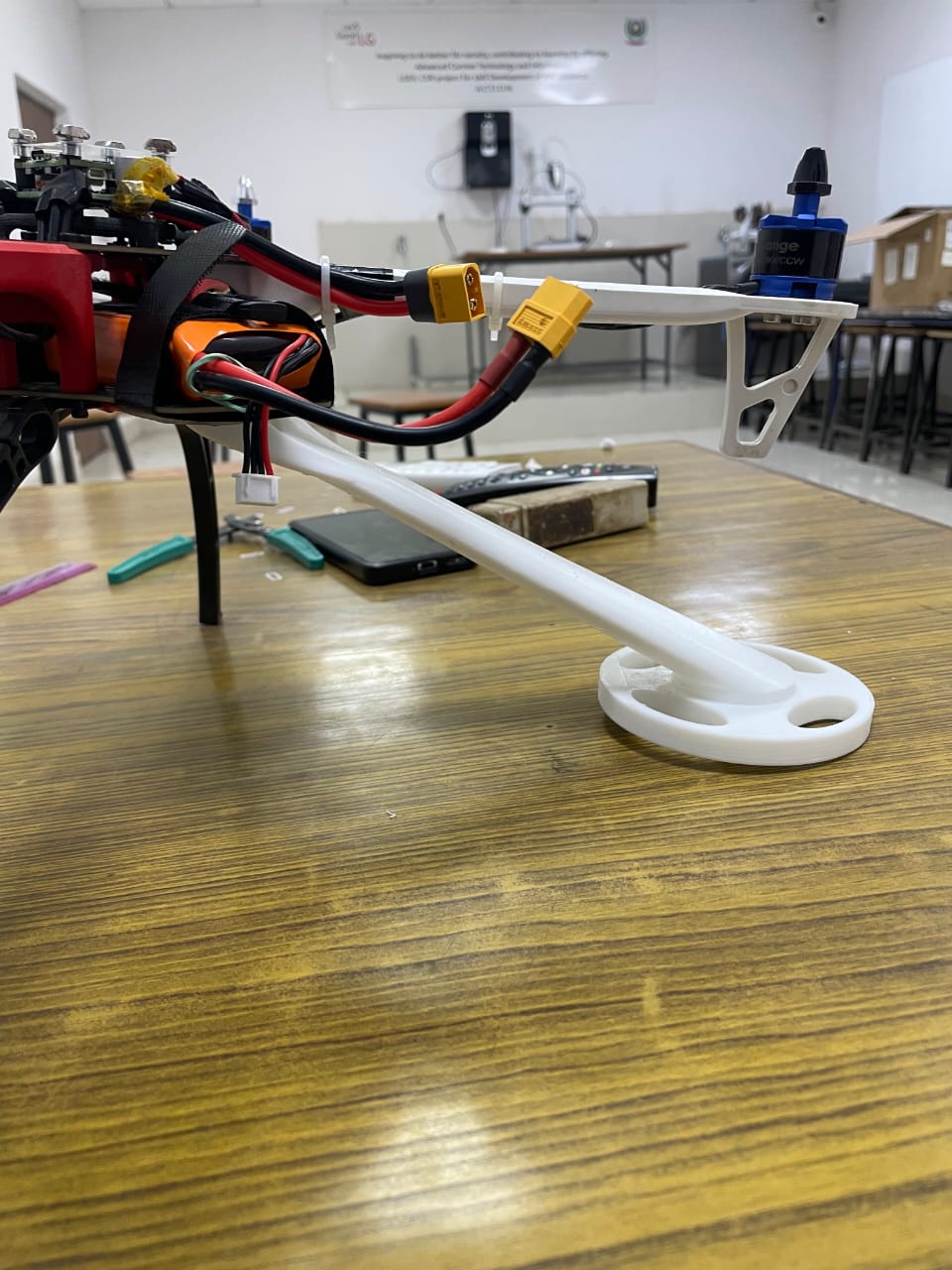
ES-LG Mk.1 incorporates a wider stance and expanded footprint area to distribute ground loads and raise roll stability. Reduced leg height lowers the effective center of mass while keeping adequate underside clearance for electronics and airflow. Color-coded landing legs give remote pilots an immediate line-of-sight heading reference and passive redundancy if an onboard FPV feed drops.

CAD, FEA, prototype fabrication & flight test media

Original engineering screenshots, 3D-printed leg fitment photos, and operational test clips from P-02.

Next Revision

Upgraded to ES-LG Mk.2

Now iterating on upgraded DFAM principles for lighter mass and stronger print layer orientation.

Back to Projects Read Nov 1 Dispatch